
$5.17
*책 표지의 가격은 원화 기준입니다. 페이팔 결제를 통해 진행되며, 환율에 따라 미국 달러로 결제됩니다. 실시간 환율에 따라 최종 금액이 약간 달라질 수 있습니다
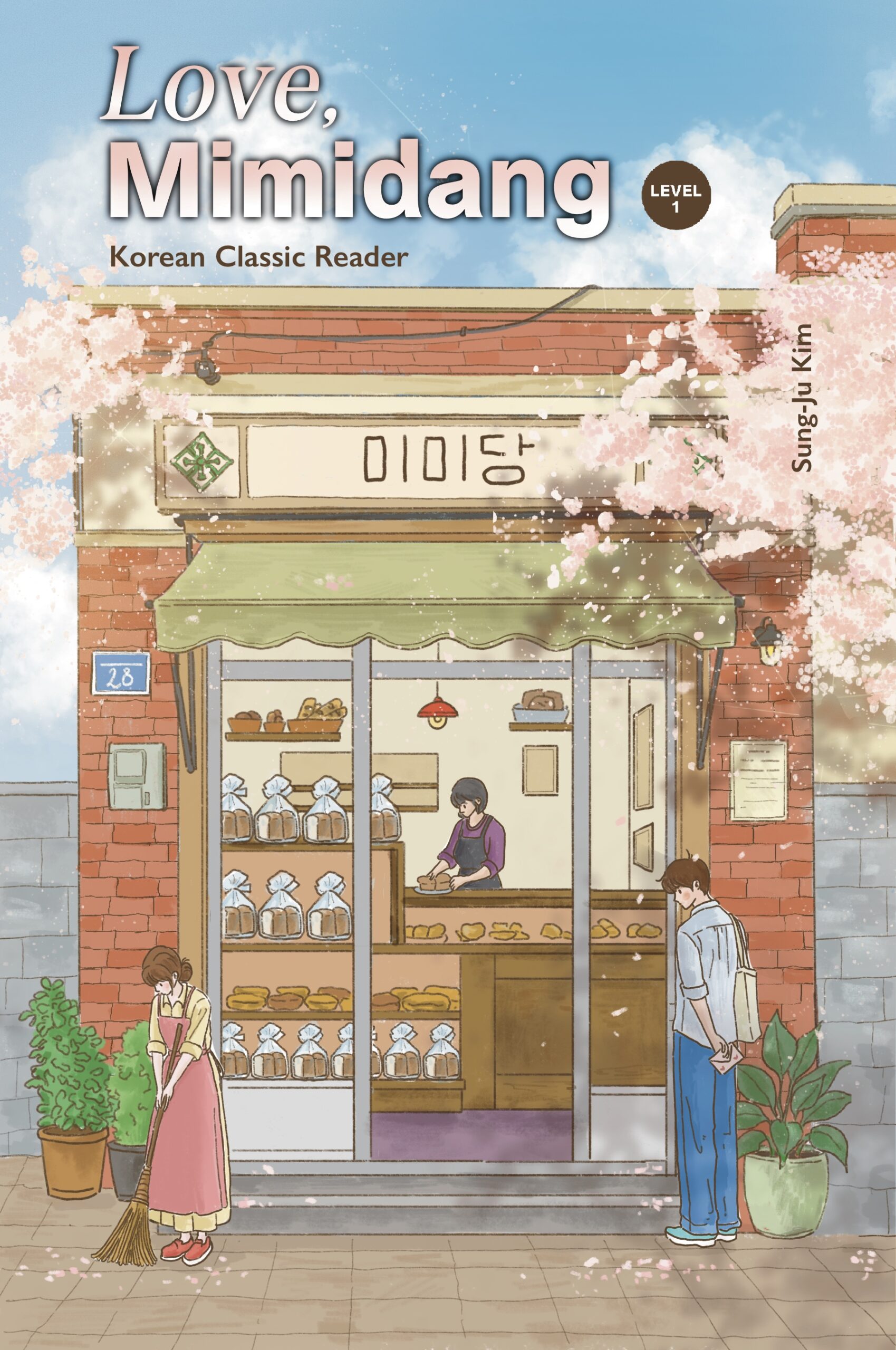
A neighborhood bakery. A boss who never smiles. One folded note that changes everything.
Korea, spring 2005. Twenty-two-year-old Hana lands her first job at Mimidang, a tiny bakery famous for the best milk bread in town. People line up for it every morning. But Mimidang is famous for something else, too: its owner, Boss Jo, and her two strange rules.
No dating at work. No personal contact with customers.
Hana doesn’t understand the rules. Neither does Bora, the senior clerk who takes her under her wing. And neither does the quiet young man who comes in at 8:30 every single morning for one milk bread and one milk — the customer Hana isn’t supposed to talk to.
Then, one morning, she finds a small folded note under a napkin on his tray.
Love, Mimidang is a gentle, funny, quietly moving story about first jobs, first crushes, and the kind of loneliness that hides behind a stern face. It is loosely inspired by Dormitory Matron B and the Love Letters (1925), a beloved short story by Korean master Hyun Jin-geon — reimagined for today’s learners in a world of flip phones and text messages.
Every sentence uses simple grammar and everyday vocabulary at the A2 / TOPIK I level. You don’t need a dictionary. Just open the book and start reading.
Read slowly. Read out loud. And maybe find some milk bread to eat while you read.
The story runs to 142 pages: a prologue, eight chapters, and an epilogue.
Each chapter is short enough to finish in one sitting, and every chapter has its own audio track.
This book is written for learners at the A2 / TOPIK I level — roughly, anyone who has finished a beginner textbook and wants to read a real story instead of another dialogue drill.
It’s a good fit if you are:
You do not need to have read the other books in the series. Each volume is a complete story on its own.
Footnotes on every page. New words are explained right where they appear, with the footnote number placed under the word itself — so your eye moves down, reads the meaning, and goes straight back to the sentence. You never lose the flow of the story.
Real bakery Korean. How to greet a customer, take an order, ask if they want it packed to go, talk with a coworker on a slow afternoon. This is the Korean you would actually hear behind a counter in Korea.
Speech levels you can feel. Watch the characters shift from polite 요 to casual 반말 as they grow closer — including the moment two of them agree to “drop the formalities.” The appendix explains all four speech levels used in the story, with examples from the pages you just read.
Full-color pages. Vocabulary is underlined, idiomatic expressions are marked in a second color, and hand-drawn illustrations appear throughout.
Study Reference appendix, including:
Learning from the Story — key grammar patterns and expressions pulled from the chapters, plus comprehension questions in the After You Read section.
Book 10 in the Korean Classic Reader series from Sophora Books: Korean classics and world classics, retold in easy Korean for learners.
The full audiobook is included free with the book.
Ten tracks — the prologue, all eight chapters, and the epilogue — recorded at a steady, natural pace for learners. Scan the QR code inside the book to listen, or stream it on any device.
Use it however suits you: listen first and read afterward, read along line by line, or put it on during your commute once you’ve finished the book. Reading and listening to the same sentences is one of the fastest ways to make new vocabulary stick.
